Read PDFs Aloud: Clear Steps Anywhere
Read PDFs aloud on PCs, iPhones, and tablets with simple tools.

What Changes When You Read a PDF Aloud
To read a PDF out loud, open it in a reader with speech support. Then turn on its read-aloud or screen-reading tool. Adobe Acrobat Reader works well on PCs. iPhone users can use VoiceOver or the Books app.
The PDF type can affect the result. A true text PDF contains words that software can select and speak. A scanned PDF holds page pictures instead. It needs OCR (Optical Character Recognition) before most tools can read it.
Some files mix both types. A form may have selectable labels but scanned pages. A book may use unusual fonts or a two-column layout. These details can change the reading order.
- Text PDF: Usually works with built-in speech tools.
- Scanned PDF: Needs OCR before speech can read it.
- Protected PDF: May block copying or access tools.
- Complex PDF: Tables, columns, and forms may sound out of order.
Test the file before changing your settings. Select a sentence with your cursor. If you cannot select words, the file may need document scanning for accessibility.
Built-In Ways to Read a PDF

Built-in tools are the fastest place to start. They cost nothing and need no extra download. Their controls differ between Windows, macOS, iPhone, and iPad.
Read a PDF out loud on a PC
In Adobe Acrobat Reader, open the PDF first. Choose View, then Read Out Loud, and then Activate Read Out Loud. Pick Read This Page Only or Read to End of Document.
Click a page area to start speech. Use the same menu to pause or stop the voice. You can change the voice and speed through your computer's speech settings.
This method works best when the PDF has real text. Adobe explains its speech controls in Adobe's PDF reading instructions. The page also covers reflow, which can make small screens easier to read.
Use an iPhone or iPad
For VoiceOver, open Settings, choose Accessibility, and select VoiceOver. Turn it on, then open the PDF in Files, Mail, Safari, or another app. Swipe down with two fingers to start reading from the current page.
VoiceOver reads buttons and controls as well as document content. That can help users with low vision. It may also speak page controls before the main text.
The Books app offers a simpler choice for many PDFs. Open the file in Books, then use iPhone speech controls if needed. Apple lists VoiceOver gestures and speech options in its VoiceOver support guide.
That is the simplest answer to how to get iPhone to read a PDF out loud. Start with VoiceOver for full control. Use Books when you want a calmer reading view.
Third-Party Apps for Better Speech Control

Third-party apps can improve the reading experience. They often offer more voices, speed controls, and better file handling. Some can read web pages, cloud files, and scanned documents in one place.
Look for an app that supports your file type. Check whether it can open password-protected files. Also check its OCR support if you often read scans.
- Voice choices: Natural voices can make long files less tiring.
- Speed controls: A range near 1.25x to 1.75x suits many listeners.
- Reading position: Bookmarks help you return to the last page.
- Layout support: Reflow can improve narrow phone screens.
- Offline use: Downloaded voices can work without a network.
The best apps to read PDF aloud are not the same for every reader. Students may value notes and bookmarks. Commuters may want offline speech and a sleep timer.
Try a short file before paying for a plan. Listen to a page with headings, footnotes, and a table. That test reveals more than a feature list.
When an app is worth using
Choose a separate app when Acrobat sounds flat or skips parts. An app may also help when you switch between a phone and a laptop. Sync tools can save your place across devices.
Protect private files when using any outside service. Read its storage terms before uploading medical, work, or school records. A local app is safer when the file contains sensitive details.
Tips for Clearer and Easier Listening
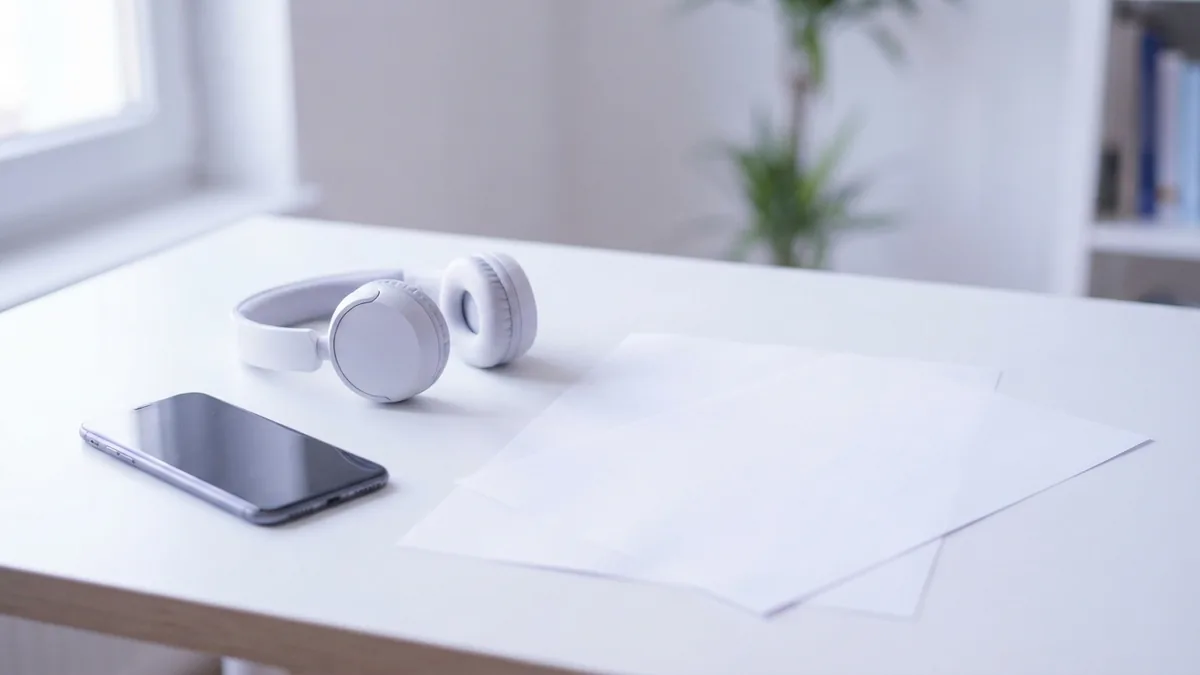
Good settings can make speech much easier to follow. Start with a quiet room and a steady voice speed. Then adjust one setting at a time.
- Check the reading order. Listen to the first page. Make sure headings come before body text.
- Lower the speed. Try 0.9x for dense material. Raise it after the voice feels clear.
- Use headings as breaks. Stop after each section. This helps you recall key points.
- Choose a clear voice. Test two or three voices with the same paragraph.
- Fix the page view. Use one-page or reflow mode on a small screen.
- Keep your place. Add a bookmark before you pause.
Tables need special care. A speech tool may read across rows without saying the column name. Read short tables in visual mode when the numbers matter.
Footnotes can also interrupt the main passage. If the reader jumps away, use page controls to return. You may get a smoother result by reading a converted copy.
Headphones help in busy places, but they can hide traffic sounds. Keep the volume low enough to hear your surroundings. Small changes add up.
Accessibility Features That Improve PDF Reading

Accessibility tools help more than people with visual impairments. They can support dyslexia, eye strain, language learning, and tired readers. Speech also lets you review a document while your eyes rest.
Useful features include adjustable speed, voice choice, zoom, contrast, and reflow. Keyboard controls can reduce the need for a mouse. Screen readers can also describe buttons and form fields.
A well-made PDF gives its pages a clear structure. It uses heading tags, reading order, image descriptions, and real text. These parts help speech tools move through the file in a sensible way.
If you create PDFs, check the file before sharing it. Select the text, move through headings, and test the forms. A quick check can reveal missing tags or a broken reading order.
- Use selectable text instead of page pictures where possible
- Add descriptions for useful images
- Set a clear order for columns and headings
- Use strong contrast between text and page background
- Give form fields useful names
Accessibility is not only a legal or design task. It affects whether a reader can study, work, or act on your file. Better structure helps every reading method.
Fixing Common Problems With Read-Aloud Tools
A PDF may open normally but still fail with speech. Compatibility problems often come from scans, missing tags, odd fonts, or file protection. First, test another short PDF in the same app.
The reader skips words
The file may be a scan without an OCR layer. Run OCR in a trusted PDF tool, then save a new copy. Check several pages because scan quality can change across a file.
The voice reads columns in the wrong order
Try reflow mode or a single-page layout. If that fails, copy the content into a clean document. Tables and sidebars may need manual review.
The read-aloud option is missing
Update the app and open the file again. Some mobile viewers show fewer tools than desktop readers. Download the file, then open it in Acrobat or Books.
The PDF asks for a password
Protected files may limit copying and speech access. Ask the file owner for an accessible version. Do not remove security from a file without permission.
The iPhone stops speaking
Check the phone volume and VoiceOver focus. Restart speech with the two-finger swipe. If the app still fails, move the PDF to Books or Files.
When the problem remains, create a fresh PDF from the source file. Keep headings, page order, and form fields intact. Then test the new file on both a computer and a phone.
Related reading

Why Can’t I Highlight a PDF? Causes and Simple Fixes
Find out why PDF highlighting fails and how to restore text selection.
How to Convert Bluebeam PDFs to Word with Clean Text
Convert Bluebeam PDFs to editable Word files using export settings and OCR.
How to Edit a Locked PDF: Unlock, Edit, and Convert
Learn why your PDF is locked and how to unlock and edit it safely.